Talking about things that have happened A’ bruidhinn mu rudan a tha air tachairt
I have been waiting here since two o' clockTha mi air a bhith a' feitheamh an seo bho dhà uair
Look out for the following pieces of vocabulary in this clip.
an dèidh dha an doras a dhùnadh after he closed the door
an dèidh dhomh fònadh thugaibh after I called you (plural/polite)
an dèidh dhuibh tighinn air ais after you came back (plural/polite)
tha cuideigin air falbh leis an rèidio someone has stolen the radio
To ask if someone ‘has been doing’ something, you use the verb followed by air a bhith and the verbal noun.
a bheil sibh air a bhith a’ feitheamh fada? (plural/polite) have you been waiting long?
a bheil e air a bhith gad chumail air ais? has he been keeping you back?
To say what might follow if you had bought something, you use a form of nam bithinn air … a cheannach.
PersonNeach
GaelicGàidhlig
EnglishBeurla
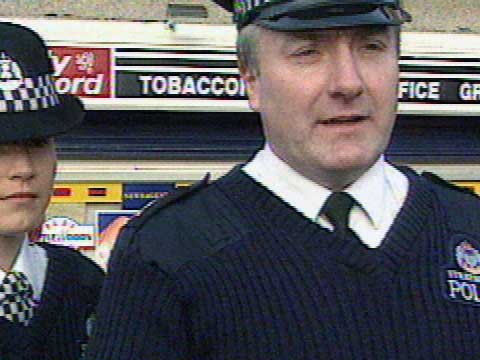
| Policeman | An innis sibh dhomh dè thachair? | Can you tell us what happened? |
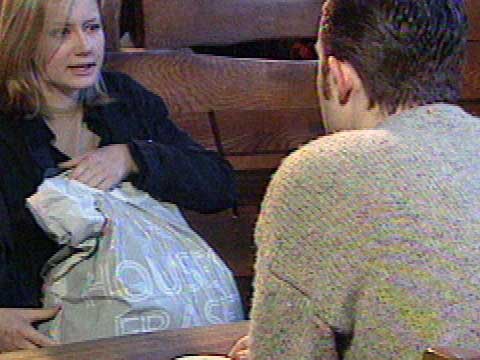
| Woman | Bha mi dìreach air tighinn a-mach às a’ bhùth sin nuair a chunnaic mi gun robh uinneag a’ chàir sin fosgailte. | I had just come out of that shop when I saw that that car’s window was open. |
| Policeman | Seadh. | Ok. |
| Woman | Uill, bha an dràibhear dìreach air an càr fhàgail nuair a chaidh mi a-steach dhan bhùth an toiseach. An dèidh dha an doras a dhùnadh, ghlais e e. | Well, the driver had just left the car when I first went into the shop. After he closed the door, he locked it. |
| Policeman | Dè rinn sibh an uair sin? | What did you do then? |
| Woman | Uill, an dèidh dhomh fònadh thugaibh, thàinig mi air ais an seo. | Well, after I phoned you, I came back here. |
| Policeman | Agus an dèidh dhuibh tighinn air ais an seo, am faca sibh rud sam bith a bha neònach? | And after you came back here, did you see anything that was strange? |
| Woman | Chunnaic. Chaidh mi a-null chun a’ chàir, agus chunnaic mi gun robh cuideigin air falbh leis an rèidio. | Yes. I went over to the car, and I saw that someone had made off with the radio. |
| Policeman | An aithne dhuibh dràibhear a’ chàir? | Do you know the driver of the car? |
| Woman | Chan aithne. | No. |
| Policeman | Am faca sibh càit an deach e? | Did you see where he went? |
| Woman | Chan fhaca. Ò, seo e a’ tighinn a-nis. | No. Oh, here he is coming now. |
| Man | A bheil rudeigin air tachairt? | Has something happened? |
| Policeman | Tha mi duilich. Tha cuideigin air briseadh a-steach chun a’ chàir agaibh, agus air falbh leis an rèidio. | I’m sorry. Someone has broken into your car and had stolen the radio. |
| Woman | Tha sin ceart. | That’s right. |
| Man | Dè? | What? |
| Policeman | An dèidh dhuibh an càr a ghlasadh, dh’fhàg sibh an uinneag fosgailte. | After you locked the car, you left the window open. |
| Man | Ach cha robh rèidio ann co-dhiù. | But there wasn’t a radio in it anyway. |
| Policeman | Dè tha sibh ag ràdh? | What are you saying? |
| Man | Cha toigh leam an rèidio idir. An dèidh dhomh an càr a cheannach, thug mi an rèidio às. Agus, cha ghabh an uinneag a dhùnadh, tha i briste. | I don’t like the radio at all. After I bought the car, I took the radio out. And, the window can’t be shut, it’s broken. |